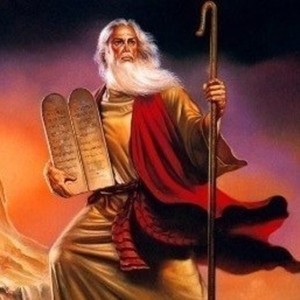
Moses has a central role in the creation of the nation of Israel. He was the divine leader of population. His millions of lives (male, six hundred thousand) exodus from Egypt (EXODUS) after relocating to eat for up to 430 years to build a house of their own in the land of promise (The Promised Land) or Canaan. is currently Israel, Palestine and Lebanon, the land rich with milk and honey. Which God prepared for his sons in particular. Mission is immense. The journey from slavery to liberty. From the dead to the viability of the Hebrews, which went on to be a stranger in a strange land, or Guadalcanal.
Prophet and deliverer of Israel
The Israelites had settled in the Land of Goshen in the time of Joseph and Jacob, but a new pharaoh arose who oppressed the children of Israel. At this time Moses was born to his father Amram, son of Kehath the Levite, who entered Egypt with Jacob’s household; his mother was Jochebed (also Yocheved), who was kin to Kehath. Moses had one older (by seven years) sister, Miriam, and one older (by three years) brother, Aaron.
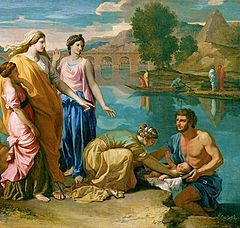
The Pharaoh had commanded that all male Hebrew children born would be drowned in the river Nile, but Moses’ mother placed him in an ark and concealed the ark in the bulrushes by the riverbank, where the baby was discovered and adopted by Pharaoh’s daughter. One day after Moses had reached adulthood he killed an Egyptian who was beating a Hebrew. Moses, in order to escape the Pharaoh’s death penalty, fled to Midian (a desert country south of Judah).
Historicity
According to archaeologist William G. Dever, the scholarly consensus is that the figure of Moses is legendary, and not historical. However, he states that a “Moses-like figure” may have existed somewhere in the southern Transjordan in the mid-13th century BC. Certainly no Egyptian sources mention Moses or the events of Exodus-Deuteronomy, nor has any archaeological evidence been discovered in Egypt or the Sinai wilderness to support the story in which he is the central figure. The story of his discovery picks up a familiar motif in ancient Near Eastern mythological accounts of the ruler who rises from humble origins: Thus Sargon of Akkad’s Sumerian account of his origins runs.
 people