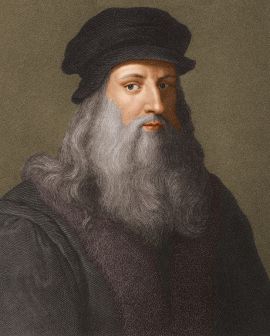
Leonardo da Vinci [Leonardo di ser Piero da Vinci]
“Iron rusts from disuse, stagnant water loses its purity and in cold weather becomes frozen; even so does inaction sap the vigor of the mind.”
Leonardo da Vinci
Synopsis
Born on April 15, 1452, in Vinci, Italy, Leonardo da Vinci was the epitome of a “Renaissance man.” Possessor of a curious mind and keen intellect, da Vinci studied the laws of science and nature, which greatly informed his work as a painter, sculptor, architect, inventor, military engineer and draftsman. His ideas and body of work—which includes “Virgin of the Rocks,” “The Last Supper” and “Mona Lisa”—have influenced countless artists and made da Vinci a leading light of the Italian Renaissance.
“Mona Lisa”
Adding to the allure of the “Mona Lisa” is the mystery surrounding the identity of the subject. Princess Isabella of Naples, an unnamed courtesan and da Vinci’s own mother have been put forth as potential sitters for the masterpiece. It has even been speculated that the subject wasn’t a female at all but da Vinci’s longtime apprentice Salai dressed in women’s clothing. Based on accounts from an early biographer, however, the “Mona Lisa” is a picture of Lisa del Giocondo, the wife of a wealthy Florentine silk merchant. The painting’s original Italian name—“La Gioconda”—supports the theory, but it’s far from certain. Some art historians believe the merchant commissioned the portrait to celebrate the pending birth of the couple’s next child, which means the subject could have been pregnant at the time of the painting.
If the Giocondo family did indeed commission the painting, they never received it. For da Vinci, the “Mona Lisa” was forever a work in progress, as it was his attempt at perfection. Leonardo never parted with the painting. Today, the “Mona Lisa” hangs in the Louvre Museum in Paris, France, secured behind bulletproof glass and regarded as a priceless national treasure seen by millions of visitors each year.
 people